


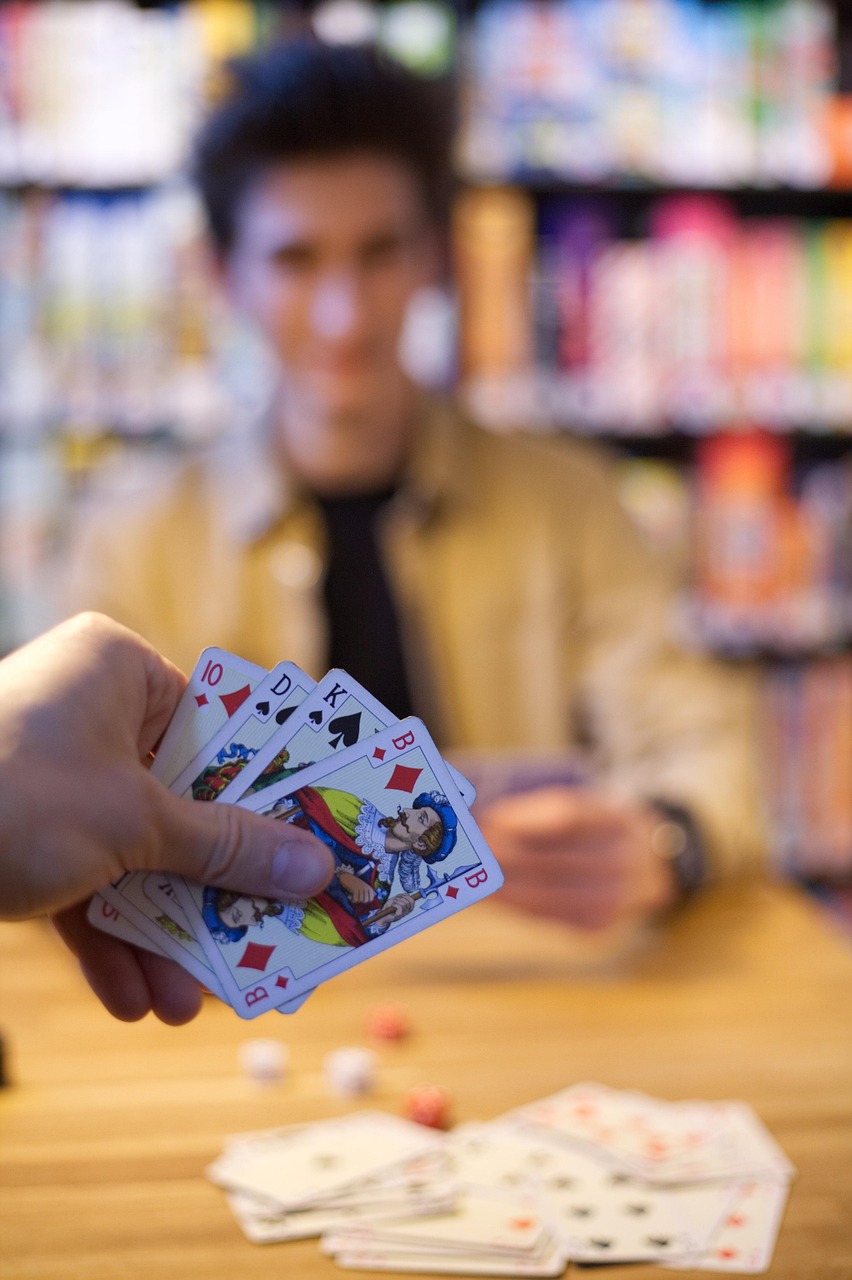
Ask ten gamblers what separates a winning poker player from a losing slot spinner and you'll get ten different answers, most of them wrong. The truth is that iGaming isn't one game — it's a spectrum. On one end sits pure chance, where your decisions are irrelevant. On the other end sits pure skill, where luck is just noise that averages out over time. Most games live somewhere in between, and knowing exactly where a game falls on that spectrum is the single most useful piece of knowledge you can carry into any online casino or sportsbook.
Where the spectrum actually runs
Poker is the outlier. Over a single hand, a fish can beat a world champion — that's variance, and it's brutal. Over 100,000 hands, the fish's edge becomes mathematically impossible to sustain. Every decision you make (bet sizing, position, reading opponents) compounds. That's why professionals track win rates in big blinds per 100 hands rather than session results. A solid cash game player might grind out 5 bb/100 over a year. That doesn't sound like much, but at $2/$5 that's roughly $25 an hour in expected value — and the long run eventually delivers it.
Blackjack sits in the middle. Basic strategy, the chart every serious player should memorize, cuts the house edge from around 2% to roughly 0.5%. Card counting can flip that edge slightly in your favor, but it requires discipline, bankroll management, and the willingness to be shown the door by casino security. Most recreational players never get past basic strategy, which is fine — a 0.5% house edge on blackjack is dramatically better than the 2.7% on American roulette or the 6.17% on the Big Six wheel. We found king88 to be a handy reference here.
Slots sit firmly on the chance end. Modern video slots use random number generators that reseed after every spin. Past results have zero predictive value. A machine that hasn't paid out in three hours is exactly as likely to hit the jackpot on the next spin as one that just paid out twice in a row. Anyone telling you otherwise is selling a system, and the system doesn't exist.
The house edge, translated into real money
Percentages sound abstract until you convert them into actual dollars. Imagine you cycle $1,000 through three different games:
- European roulette (2.7% edge): you lose roughly $27 in expected value.
- Blackjack with basic strategy (0.5% edge): you lose about $5.
- Texas Hold'em cash game (rake-based, effectively 0% against a weak table): you keep whatever edge your skill earns.
- Penny slots (often 8-12% edge on low-denomination machines): you hemorrhage $80 to $120.
That last point catches people off guard. Penny slots aren't cheap because they're generous — they're cheap per spin and expensive per dollar wagered. A $20 bankroll on a $0.20 spin burns out fast when the machine keeps 10 cents of every dollar you feed it.
Bankroll management is the skill nobody trains
Here's an uncomfortable truth: the best strategy in the world won't save you if you're betting scared money. Bankroll management is where casual players lose more often than they lose to the cards. The rule of thumb for poker is 20 to 30 buy-ins for cash games and 100 buy-ins for tournaments. For sports betting, flat-betting 1-2% of your bankroll per wager keeps you in the game long enough for your edge to materialize. For slots and other pure-chance games, the only real strategy is setting a hard loss limit before you spin — and treating it as sacred.
Chasing losses is the operator's best friend. The math doesn't care that you're "due." It never has.
Sports betting: where information becomes edge
If you want a game that rewards homework, look at sports betting. Closing line value — the idea that consistently beating the closing odds predicts long-term profit — is the sharpest tool in a bettor's kit. If you can get the Chiefs at -3 and the line closes at -4.5, you've extracted value regardless of the result. Over a season, bettors who consistently beat the closing line by half a point or more win around 53-55% of their bets, which is the thin margin between profit and donation.
Be warned, though: the soft lines left by recreational bettors are disappearing. Modern sportsbooks use algorithmic pricing, and the edges that existed in 2015 mostly evaporated by 2020. You now need injury news, weather data, or niche market inefficiencies to find consistent value.
Five traps that quietly drain players
- Gambler's fallacy. Red hitting eight times in a row doesn't make black more likely. Independent events don't remember the past.
- Chasing bonuses without reading terms. A 40x wagering requirement on slots at 96% RTP means you're expected to lose more than the bonus is worth. Read the fine print before you claim a welcome package.
- Playing tired or tilted. Tilt is a skills-game killer. In poker, it's the single most common reason winning players have losing sessions.
- Ignoring RTP differences. A 96% RTP slot versus a 92% RTP slot is a 4% gap per spin — huge over thousands of spins.
- Believing in hot streaks. Random number generators are, by definition, immune to emotion.
What actually matters for the long haul
Play games where decisions affect outcomes if you want a shot at long-term profit: poker, blackjack with proper strategy, sports betting with genuine analysis. Play games of pure chance for entertainment, with money you can afford to lose, and never confuse the two. That's not a moral lecture — it's arithmetic. The casino industry exists because most players don't make that distinction, and understanding it is the difference between a hobby and a leak.
The old poker saying applies everywhere in iGaming: the game is played over a lifetime, not a session. Act accordingly, and you'll outlast the people who don't.


Leave a reply